Shockwave Therapy in Lawrence, KS

Tired of Pain That Won't Go Away? Shockwave Therapy Might Be the Answer.

You've rested it. Iced it. Maybe even pushed through physical therapy. But that plantar fasciitis, tennis elbow, or stubborn tendon pain is still here — and it's starting to feel like this is just how things are now.

It doesn't have to be.

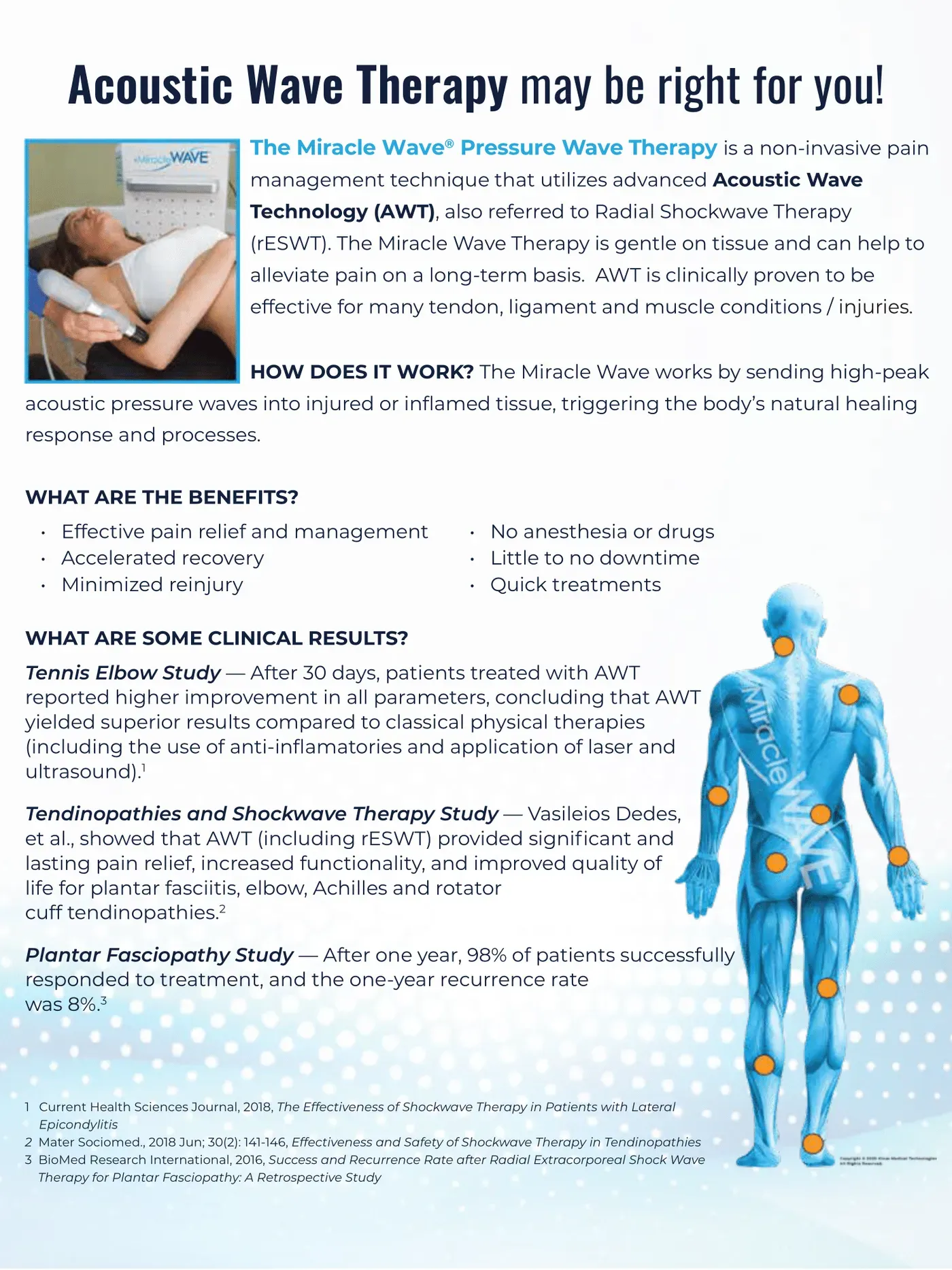
Shockwave Therapy (ESWT) uses focused sound waves to break up scar tissue, stimulate new blood vessel growth, and trigger your body's own regeneration process in damaged muscles, tendons, and ligaments. For athletes, weekend warriors, and anyone dealing with chronic pain that hasn't responded to other treatments, it's a non-invasive way to heal injuries that used to take months — often in a fraction of the time.

At The Chiropractic Experience, shockwave therapy isn't a stand-alone gimmick — it's part of a holistic treatment plan built around you. From your very first visit, Dr. Mark Howarter will walk you through exactly what to expect: how many sessions make sense for your injury, and how shockwave therapy works together with chiropractic adjustments and rehab exercises for lasting results.

You don't have to keep living around your pain. Let's find out if shockwave therapy can get you back to the life you're missing.
Common Issues Shockwave Therapy Can Help With

Service symptoms imagePlantar fasciitis and chronic heel pain

That first painful step out of bed every morning isn't something you just have to live with. Shockwave therapy targets the damaged tissue directly, helping it finally heal instead of just managing the ache day after day.

Tennis elbow and golfer's elbow

When every grip, swing, or handshake sends pain up your arm, it affects more than your game — it affects your work and your patience. Shockwave therapy stimulates healing in the irritated tendon at its source, not just where it hurts.

Achilles tendonitis and tendon injuries

A nagging Achilles or tendon injury has a way of making you dread the activities you used to love. Shockwave therapy kickstarts your body's natural repair process, helping stubborn tendon injuries heal instead of lingering for months.

Rotator cuff injuries and shoulder pain

Reaching overhead, sleeping on your side, even lifting a grocery bag shouldn't come with a wince. Shockwave therapy helps repair damaged shoulder tissue, easing pain so you can move freely again.

Muscle knots, trigger points, and old scar tissue

Some pain doesn't come from a single injury — it builds quietly from tension and old scar tissue that never fully released. Shockwave therapy breaks up that buildup, helping your muscles finally let go.

Sports injuries — strains, sprains, and repetitive-use injuries

Whether it's your athletic kid sidelined from a strain or your own weekend-warrior sprain that won't quit, getting back to the game matters. Shockwave therapy speeds healing so injuries that used to take months on the sideline take weeks instead.

Chronic hip, knee, or back pain

When you're hoping to avoid injections or surgery, it's easy to feel like you're out of options. Shockwave therapy offers a non-invasive path forward — addressing the pain at its source instead of just managing it.

The Shockwave Therapy Process

When you visit us for shockwave therapy in Lawrence, KS, we start by assessing your pain, goals, and activity level — then build a custom treatment plan specifically for you. This is part of the same approach behind everything we do at The Chiropractic Experience: no guessing, no generic protocols, just a plan built around your actual injury.

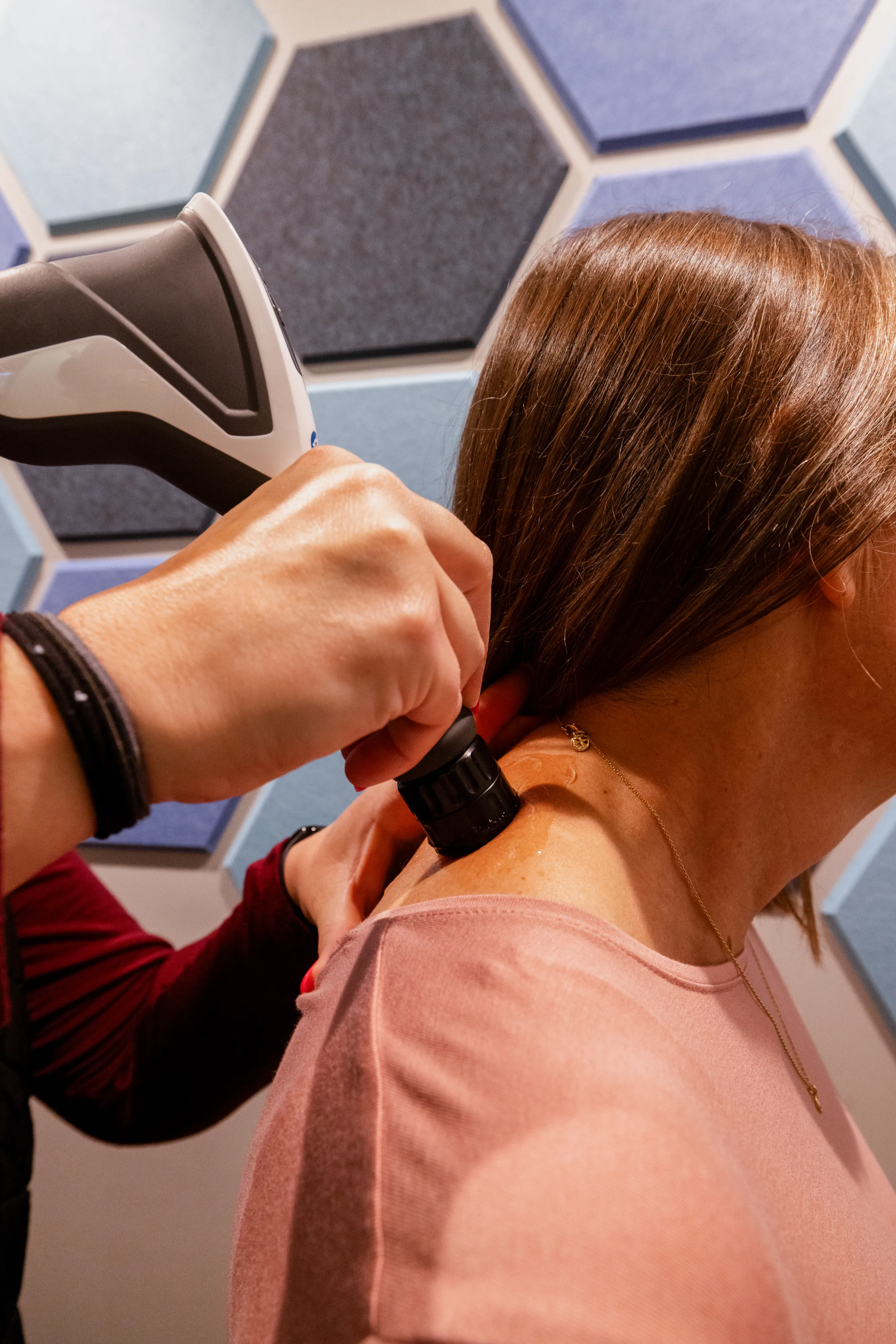
During your session, you'll relax while Dr. Mark Howarter or Whitney Rothwell, our Shockwave Therapist uses a handheld device to deliver targeted sound waves directly to the problem area. Most people feel a deep, rhythmic tapping sensation — sometimes with mild discomfort — and we'll check in throughout to adjust the intensity so you stay comfortable. Each treatment takes just 10 to 20 minutes, with no downtime and no restrictions afterward. You can go right back to your day.

Many patients notice some relief after their first or second session, though a full course of 3 to 5 visits is typically recommended for lasting results. Throughout your care, we'll answer your questions, walk you through simple stretches or exercises to support your healing, and track your progress closely — because waiting to feel better is hard, and we want you to know exactly where you stand at every step.

What the Research Says About Shockwave Therapy

Shockwave therapy (ESWT) is one of the most studied non-invasive treatments for tendon and soft-tissue injuries, with decades of clinical research behind it.

The strongest evidence supports its use for:

  1. Tennis elbow (lateral epicondylitis): A 2020 meta-analysis of 13 randomized controlled trials involving over 1,000 patients found ESWT significantly improved pain scores and grip strength compared to other treatment methods, with better overall safety.
  2. Calcific rotator cuff tendinitis: Clinical benefit has been well established for calcific tendinitis of the rotator cuff, one of the conditions where ESWT research is most consistent.
  3. Plantar fasciitis: some large trials have found meaningful benefit over placebo, while others have found no significant difference. A 2016 meta-analysis of nine studies found ESWT improved heel pain outcomes compared to placebo, but results vary by study and treatment protocol.

As with any treatment, individual results vary, and shockwave therapy works best as part of a complete care plan. During your visit, Dr. Mark Howarter, D.C. will discuss what the evidence supports for your specific condition and whether shockwave therapy is the right fit for you.

Frequently Asked Questions About Shockwave Therapy


Is shockwave therapy painful?

We won't pretend there's zero sensation — most patients feel some discomfort during treatment, similar to a deep, rhythmic tapping. But it's brief, well-tolerated, and your provider adjusts the intensity based on what you can comfortably handle. Compared to the pain you came in with, most patients find it's a fair trade.

How many sessions will I need?

Typically just 3 to 5 sessions, spaced one to two weeks apart — far fewer than many other treatments. Most patients start noticing real improvement within 6 to 12 weeks as the tissue heals.

Are there any side effects?

Mild, temporary side effects are possible — some redness, swelling, or tenderness at the treatment site for a day or two. Serious complications are rare. Dr. Mark Howarter, D.C. will walk you through exactly what to expect for your specific injury before you ever begin.

Is shockwave therapy right for everyone?

For most people dealing with stubborn tendon or soft-tissue pain, yes. It's not recommended for anyone who is pregnant, has certain blood clotting disorders, is on blood-thinning medication, or has had a steroid injection in the treatment area recently. We'll review your health history during your consultation to make sure it's genuinely the right fit for you.

Will shockwave therapy actually help me avoid surgery or injections?

For many patients dealing with plantar fasciitis, tennis elbow, or tendon injuries that haven't responded to rest or physical therapy, shockwave therapy offers a real non-invasive option before more aggressive treatments. We'll be honest with you about whether it's likely to help your specific condition.

How soon will I feel relief?

It varies by injury and how long you've been dealing with it. Some patients notice improvement after just a few sessions, while others take longer as the tissue rebuilds. We know waiting to feel better is hard — that's why we track your progress closely and adjust your care plan as needed.

Can shockwave therapy be combined with chiropractic care?

Yes — and we often recommend it. Shockwave addresses the injured tissue directly, while chiropractic adjustments and rehab exercises support the surrounding structure, helping you heal more completely and stay that way.


Still have questions? Schedule a consultation and we'll walk you through everything →
Placeholder image